



Editor’s Note: Every year, American scientists submit hundreds of thousands of grant applications to federal agencies. A minority of these applications are then funded.1 What happens to the rest? In many cases, the scientist modifies the idea based on reviewer feedback and submits the application again, or submits it to a different agency or a private philanthropy. This can take months or years, and some good ideas are never funded, perhaps because they were below a scoring cutoff, they were too novel, or didn’t quite fit what a federal agency was looking for.
This piece has a simple suggestion: Rather than letting those ideas sit in digital file drawers, we offer them to philanthropists who might fund them. Perhaps instead of spending another year modifying a grant and throwing it back into an application portal, a scientist could be funded immediately by a foundation that finds their idea exciting.
I think this idea, sharing unfunded grant applications with other potential funders, has a real chance of being implemented. It’s easier than ever to do technologically and I haven’t heard a compelling reason why it shouldn’t happen.2
About the authors: Sandeep Patel and Amit Gupta are co-founders of Catalyze. Stuart Buck is Executive Director of the Good Science Project (where we are cross-posting this piece). And Ian Banks is Director of Science Policy at the Foundation for American Innovation.
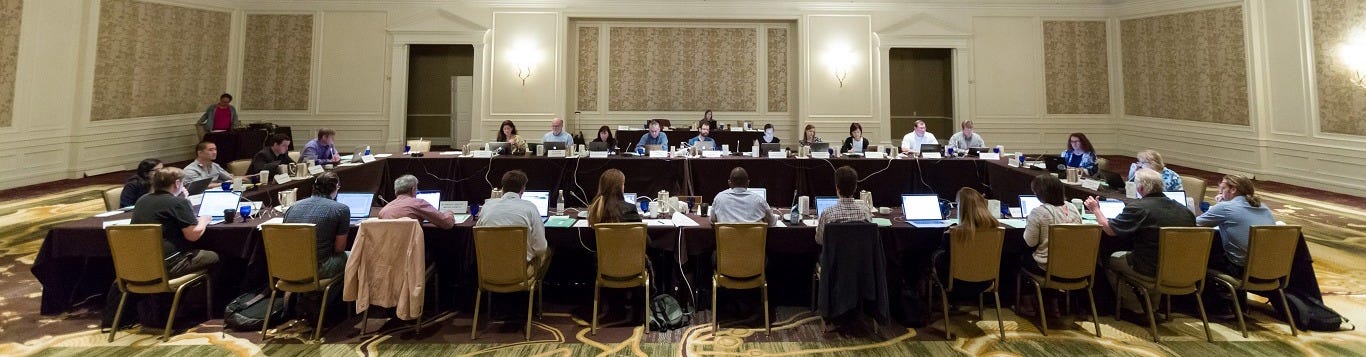
Every year, federal agencies assess over a hundred thousand proposals that they never fund. Treating those peer review as public infrastructure could help unlock much more philanthropic capital for American research.
The National Institutes of Health (NIH) and the National Science Foundation (NSF) together run the most prolific scientific evaluation operations on the planet. Every year, they collectively review 110,000+ proposals, spanning everything from fundamental biology to quantum computing. While there is not wide agreement regarding how reviews should be conducted or how funding decisions should be made, no other process exists that applies rigorous, standardized review on such a comprehensive set of proposals.
In 2025, NIH reviewed 62,592 research grant proposals and only funded 8,161 (13%). That leaves thousands of proposals that were deemed to be in the top quartile, but are going unfunded due to a lack of money rather than a lack of merit. NSF exhibits the same pattern across a far broader set of fields (NIH only funds biomedicine, whereas NSF funds many other areas of basic science, including materials science, engineering, computer science, basic biology, and the social sciences).
The cost to produce reviews at this scale is substantial. Taxpayers support infrastructure at federal agencies, which totals roughly $263 million at NIH alone. Thousands of expert reviewers each volunteer on average 4-8 hours per application. And applicants spend an average of 116 hours writing each application. The time from when a scientist writes a proposal to when they receive grant funding can be up to two years.
Whether a proposal gets funded is largely driven by peer review scores, but the detailed record (such as the actual scores and reviewer commentary) isn’t transparent at all. Peer review data disappears into an agency database that is almost never made available to anyone else. We think that these data should be far more transparent, so that they can help inform science funding organizations and the public.
Our proposal: make peer review scores and comments on unfunded proposals available to private funders through a shared platform. The scientist should be able to opt in and retain some control over what to share, but then the advantages are two-fold: (1) extra opportunities for the scientists to get funded (few researchers would object to that!), and (2) funders can more easily find vetted work that is matched to their interests.
What is needed, in effect, is a way for the public to reap the benefits of the millions of hours of due diligence that they have already paid for.
The moment is ripe. American philanthropy is arguably about to enter its third great wave, beginning now with Silicon Valley wealth (much from AI) and intergenerational wealth transfer, driven by donors who intend to give while they are living, who think in terms of measurable outcomes, and who are likely to be more comfortable with risk and with novel mechanisms.
Even when put against the NIH’s roughly $48 billion budget, private philanthropy is already quite significant: The Gates Foundation gave away over $8 billion in 2024, while the OpenAI Foundation is capitalized at more than $220 billion and has announced an initial $25 billion commitment to curing diseases and bioresilience.
Many new donors want to fund science, including relatively new fields like biosecurity. Our federal scientific institutions (even with budgets growing at a typical pace, let alone with budgets under attack as they currently are) cannot possibly fund all of the meritorious proposals they receive, leaving great ideas unpursued. The third wave is arriving with its checkbook open and limited immediately-available options to write the check. Federal peer review could easily be reused as a signal of what private philanthropists should fund.
A skeptic might reasonably ask whether scientists themselves want their unfunded proposals to be circulated more broadly. Over the past several months we have spoken with more than 250 researchers, institutions, and companies across the United States and around the world, including interviewing dozens of principal investigators (PIs) directly about this question. We have heard near unanimous willingness, if not eagerness, to participate in such a system if it existed, assuming that scientists still maintained some level of visibility and control over what was shared and with whom.
Several small-scale examples of a marketplace for federal peer review already exist. The NIH has attempted a narrow pilot of a similar program that received researcher support. NIH’s Online Partnership to Accelerate Research effort gave highly rated but unfunded applicants a second channel to private funders, but ultimately it was too administratively complicated and its funder base too narrow for widespread adoption. The NSF’s Collaborative Research in Computational Neuroscience (CRCNS) program, still in operation today, offers other funders access to NSF reviews in computational neuroscience, including other government funders and philanthropy. As part of a very specific, highly interdisciplinary field, this program has backed research behind several modern AI advances, including brain-computer interfaces and spiking neural networks.
Another objection rests on whether the federal government can lawfully share this information. In the lightest-touch version, no disclosure is required. Agencies can email each applicant a private code, and the applicant then shares their own materials with a new potential funder. Neither the Privacy Act nor the Trade Secrets Act (18 U.S.C. § 1905) are implicated here. Indeed, the federal government already draws this line elsewhere: NIH and NSF publish the title, PI, abstract, and amount of every funded award.
We believe consent should be explicitly investigator-controlled. A PI would be able to opt in, and control access to abstract-level summaries, full proposals, and any panel reviews. A reporting layer would make a project’s existing support (from the government or philanthropists) visible, enabling a project to receive multiple gifts and for philanthropists to see where funding is most needed. None of this would require the government to spend significant capital or to endorse a particular funder. This proposal only requires federal agencies to make available evidence they already produce.
We can further reduce friction via two more expansive options. One option is to add an opt-in box to the NIH or NSF application, authorizing the agency to transmit the full proposal and reviews directly to the platform on the researcher’s behalf. Because that disclosure rests on the applicant’s written consent, it falls within the Privacy Act’s consent exception (§ 552a(b)) and would require no new system-of-records change. The only procedural step needed would be to modestly revise the agency’s approved information collection under the Paperwork Reduction Act.3
A second option, adopted by the NSF CRCNS program, is to disclose in the Request for Proposals itself that proposals and their reviews will be shared with outside funders.
Two additional concerns should be addressed. The first is substitution: if philanthropy funds what the agencies are meant to support, does that hand Congress a rationale to cut public research budgets further? The best answer is that philanthropy and government largely have different views on prioritization, meaning there is natural complementarity to their co-existence. Rather than replacing public funding, philanthropy will most likely remain additive capital, reaching work that government agencies failed to fund.
The second concern is that simple metrics like percentile scores are noisy and are not reliable marks of quality, especially for a diverse set of funders with diverse motivations. This is correct, which is exactly why the summary of the agency assessment, along with detailed reviewer commentary and disagreement, should be included alongside any top-level percentile scores. In fact, we believe that sharing peer review information can uniquely enable more diverse prioritization of research by allowing funders to see with greater clarity how they fit into the larger funding ecosystem.
Our primary goal is to attract more capital into research. Through our proposed platform, philanthropy could complement federal funding and broaden the range of what gets funded. Where funders might normally duplicate each other’s evaluations in private, they could instead build on existing peer reviews and coordinate with each other through a shared platform. Besides bringing in more funding, treating peer review as public infrastructure would make the ecosystem more legible to everyone involved.
Shared infrastructure could enable the work of federal peer review to compress the timelines of other funders. Today, a proposal can wait the better part of a year for a funding decision, and many of the best and most ambitious ideas remain unfunded. In general, we should be building toward a world in which all the best ideas are funded, and the time from generating a very good idea to getting it funded goes to zero. This proposal could bring us one step closer to that distant goal.
This would not require the federal government to lower its standards in peer review, nor change what it chooses to fund. We should simply stop discarding the output of the largest and broadest scientific evaluation system ever built.
This was the case before the second Trump Administration started, but an even smaller percentage of awards are funded now. The National Institutes of Health (NIH) publishes what percent of applications are awarded, and between 2020 and 2024, the success rate for R01-equivalent grants (the main project grant at NIH) ranged between 19% and 22%. In 2025, it was 13%.
In addition to philanthropists being able to fund projects that were not selected by federal agencies, sharing information on unfunded projects can be a boon for metascience research. Read a discussion of this angle from Stuart Buck and Chris Marcum here.
This is well-trodden ground: in 2019 NIH amended its own electronic-research-administration system of records (09-25-0014) to push impact scores and summary statements to applicants' institutions. Sharing that record with a chosen funder therefore asks nothing new of the agency and touches none of the reviewer-confidentiality protections that peer review (42 CFR Part 52h) is built to guard.


Very interesting idea. I wonder what happens over time if applicants know before submitting that a proposal reviewed but not funded by NIH/NSF could still be put in front of a wider group of funders. Could this change the number or mix of applications in a way that puts more pressure on the review process? If it did bring in more proposals, some of them could be excellent and well suited to philanthropy, even if they sit towards the edge of what the original call is trying to fund or might not otherwise have been sent to NIH/NSF. But a public call is written around a particular job the funder is trying to do. It also sets some limits on what reviewers in an already stretched system are being asked to spend their time looking at.
If this were piloted, I’d be really interested to see how the number/mix of applications to public calls changed, and how philanthropies used the pool alongside their existing ways of finding ideas.
Great idea, Sandeep et al!. I suspect some philanthropists may care deeply about 'broader impacts' to society that they might achieve by funding some of these proposals. As you know, NSF has an existing 'broader impacts' criterion that evaluates proposals based on those societal outcomes. Explicitly teasing out broader impacts and perhaps allowing philanthropists to search for impacts that they may want to encourage might make your proposal even more valuable. Shorting of sharing detailed peer review results, a focus on having proposers opt in to sharing their anticipated broader impacts might be apt.
Also, in March, NASA did a Request for Information (RFI) about potential payloads to land on the Moon. Interestingly, the RFI allowed payload concept submitters to opt in to publicly share their payload concept as part of a public lunar payload database. The RFI explicitly calls out philanthropists and says that NASA could potentially convene meetings between payload developers and philanthropists. This could be an interesting complement to what you're suggesting, though it wouldn't allow for prioritized review score sharing to be made to outside funders, so less assurance of quality. RFI link: https://sam.gov/workspace/contract/opp/130cb34208044e5692942416229bd993/view